What Makes a “Perfect” Porch in the Carolinas? (Hint: It’s Not Just the View)
There’s something about a porch in the Carolinas. Mornings feel slower with a cup of coffee, and evenings stretch just a little longer when the air cools down. Around here, a porch isn’t just a feature—it’s part of how people live.
But here’s what most homeowners eventually realize: a beautiful porch doesn’t always mean a usable porch.
You can have the perfect view, the right furniture, even a great layout—and still find yourself heading back inside. Heat, bugs, glare, and humidity have a way of quietly taking over.
So what actually makes a porch perfect in the Carolinas? It comes down to something simpler—and more practical—than most people expect.
It Starts with the Climate (Whether You Plan for It or Not)
The Carolinas don’t stay mild for long. Spring brings pollen and rising temperatures. Summer follows with heat, humidity, and sudden rain that shows up without warning.
If a porch isn’t designed with these conditions in mind, it usually ends up underused.
What to do about it:
Start by thinking of your porch as a space that needs to perform—not just look good. Walk out there at different times of day and in different weather conditions. Where does it get uncomfortable? Too hot? Too exposed to rain? Too humid?
Those pain points are your starting point. Once you identify them, you can make targeted improvements instead of guessing.
Airflow Is Everything (And Most Porches Get It Wrong)
You might assume a larger porch automatically feels better. In reality, airflow matters more than size.
A porch without proper airflow can feel heavy and stagnant, especially during humid afternoons. On the other hand, a smaller space with a steady breeze can feel surprisingly comfortable.
What to do about it:
Look at how air moves through your porch:
- Are there openings on opposite sides to create a cross-breeze?
- Is furniture blocking airflow?
- Does the space feel “trapped”?
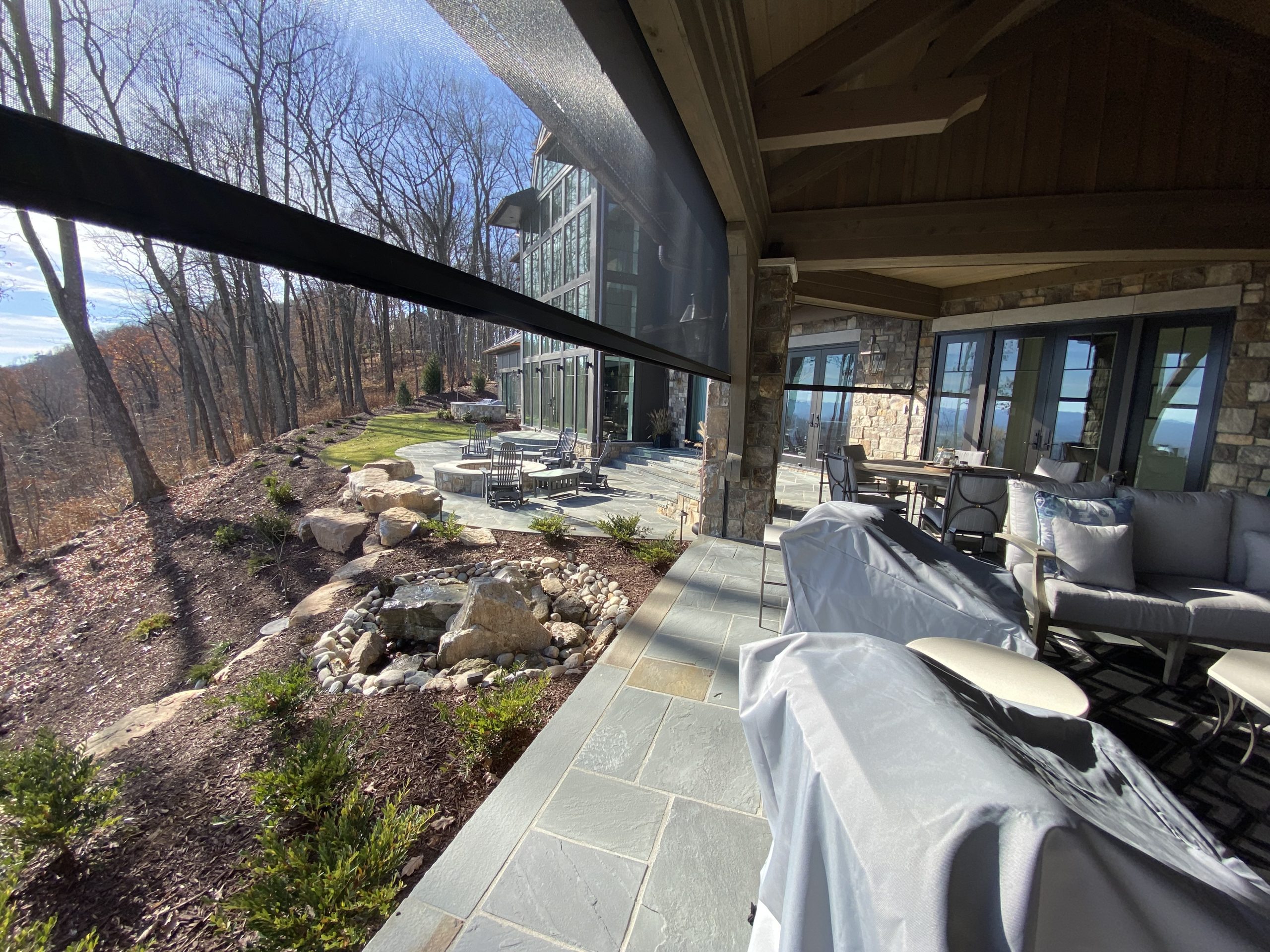
If airflow is limited, small changes can make a big difference. Rearranging the layout, adding a ceiling fan, or choosing a more flexible screen setup can help keep air moving without closing the space off.
Sun Control Can Make or Break the Space
A porch can feel perfect in the morning—and completely unusable by mid-afternoon.
Direct sun brings heat and glare, and once that builds up, most people head back inside.
What to do about it:
Pay attention to how sunlight hits your porch throughout the day. Spend time out there in the afternoon and notice where it becomes uncomfortable.
From there, the goal isn’t to block sunlight completely—it’s to control it:
- Add shade where the sun is strongest
- Reduce glare without losing natural light
- Keep the space bright but comfortable
When you manage sunlight properly, your porch becomes usable for far more hours each day.
The Bug Problem (Why It’s Worse Than You Think)
If you’ve spent any time outdoors in the Carolinas, you already know—bugs are part of the experience.
Spring kicks things off, and by summer, mosquitoes and other insects are in full force. It doesn’t take long before a relaxing evening turns into a constant battle.
What to do about it:
If bugs are limiting your time outside, an open porch will always struggle.
The most effective approach is creating a barrier while keeping the space open and comfortable:
- Screening helps keep insects out
- Airflow should still be maintained
- The space shouldn’t feel closed in
The right setup lets you enjoy evenings outside again without constantly thinking about bugs.
Flexibility vs. Permanence: The Big Design Decision
One of the biggest decisions homeowners face is whether to go fully open or fully enclosed.
- Open porches feel airy, but offer little protection
- Enclosed spaces offer comfort, but can feel limiting
What to do about it:
Think about how your needs change throughout the day.
In the morning, you may want openness and fresh air.
In the afternoon, you may need shade and heat control.
In the evening, you want protection from insects.
A porch that can adapt to those changes will always get used more than one locked into a single setup.
If your current space feels limited, the issue often isn’t the porch itself—it’s the lack of flexibility.
Privacy Without Feeling Closed In
As neighborhoods grow, privacy becomes more important—but no one wants their porch to feel boxed in.
Too open, and it feels exposed.
Too closed, and it loses that outdoor atmosphere.
What to do about it:
Look for ways to create separation without blocking everything:
- Strategic screening or shading
- Partial barriers instead of full enclosure
- Maintaining visibility from inside out
The goal is simple: feel comfortable in your space without sacrificing the openness that makes a porch enjoyable.
How the Best Porches Actually Get Used
Here’s the real test of a great porch:
Do you use it without thinking about it?
The best outdoor spaces naturally become part of your routine:
- Morning coffee
- A quick break during the day
- Relaxing in the evening
If your porch only gets used occasionally, something is getting in the way.
What to do about it:
Ask yourself:
- What time of day do I avoid using this space?
- Why?
Fixing that one issue—whether it’s heat, bugs, or glare—often changes everything. Small improvements can turn an underused porch into one of the most used areas of your home.
The Carolina Factor: Why Location Still Matters
Not every porch in the Carolinas faces the same challenges.
In areas like Upstate South Carolina and parts of Western North Carolina, you might have:
- More tree coverage and shade
- Cooler evenings
- Different airflow patterns
In more open areas, the focus might shift toward:
- Managing direct sun
- Dealing with higher heat
- Creating shade where there isn’t any
What to do about it:
Instead of copying someone else’s setup, focus on your specific environment. What works for one home may not work for another just a few miles away.
Bringing It All Together: What a “Perfect Porch” Really Looks Like
When everything is working together, a great porch has a few key qualities:
- It’s comfortable in more than one season
- It manages heat, sun, and sudden weather changes
- It minimizes bugs without feeling closed off
- It allows airflow when you want it
- And most importantly—it actually gets used
That last one is what matters most.
Your Porch Should Work for You—Not Against You
If your porch looks great but sits empty, it’s usually not a design issue—it’s a usability issue.
Maybe it’s too hot.
Maybe bugs take over.
Maybe it just doesn’t feel comfortable enough to spend real time there.
The good news is, those problems are usually easier to fix than people expect.
In many cases, a few thoughtful adjustments can completely change how the space feels—and how often you use it.
If you’ve been thinking about improving your outdoor space, it’s worth taking a closer look at what’s possible when comfort, flexibility, and real-world use all come together.
Key Takeaways
- A perfect porch in the Carolinas is designed for real conditions—not just appearance. Heat, humidity, sun exposure, and seasonal bugs all play a role in how often your porch actually gets used.
- Airflow, shade, and bug control are the three biggest factors in day-to-day comfort. When these are addressed properly, your porch becomes usable throughout the day instead of just early mornings or evenings.
- Flexibility matters more than permanence. Porches that can adapt to changing weather, sunlight, and seasons consistently get used more than spaces locked into a single setup.
- Small adjustments can completely change how your porch feels. Identifying problem areas—like excessive sun, poor airflow, or insect exposure—often leads to simple improvements that make a big difference.
- The best porch isn’t the one that looks perfect—it’s the one you use every day. Comfort, usability, and consistency are what turn an outdoor space into a true extension of your home.